
Does your Beagle race around the living room, chase every interesting smell, or demand another game just when you are ready to relax? If so, you may be asking, when do Beagles calm down? Many Beagles begin to show better self-control between 12 and 24 months, with noticeable improvements around their second birthday. Some remain especially energetic until age three or beyond. Their individual temperament, experiences and daily routine matter as much as age.
Understanding Beagle energy levels, Beagle puppy behavior and the different Beagle development stages can help you set realistic expectations. A hyperactive Beagle may need more appropriate exercise, more opportunities to use its nose, better sleep, or help learning how to relax. High energy does not always mean a dog needs a longer walk.
This guide explains at what age Beagles calm down, how to recognize Beagle behavioral maturity, and how to manage your dog’s enthusiasm using mental stimulation for Beagles, positive reinforcement training and a predictable Beagle exercise routine. Whether you have a teething puppy, an excitable adolescent or a restless adult, you can start building calmer habits today without suppressing the curious personality that makes this breed so appealing.
Beagle Energy Levels by Age: A Quick Overview
The following timeline is a practical guide to common patterns, not a scientific energy score or a prediction for every dog. Developmental stages overlap, and a Beagle with excellent settling skills may appear calmer much earlier than another dog of the same age.
| Age | Typical activity | What you may notice | Training priority |
|---|---|---|---|
| 8 weeks–4 months | Short energetic bursts | Chewing, exploration, frequent naps | Safe socialization and rest |
| 4–6 months | High | Teething, play, increasing confidence | Redirection and basic cues |
| 6–12 months | Often very high | Distractibility, pulling, excitement | Recall foundations and impulse control |
| 12–24 months | High but increasingly manageable | Longer focus and better recovery | Consistent routines and settling |
| 2–3 years | Moderate to high | More predictable behavior | Maintaining enrichment and skills |
| 3–7 years | Individual; often more balanced | Established habits and play preferences | Fitness and ongoing training |
| Older adult / senior | Variable, often declining | Longer rest or reduced stamina | Comfort and veterinary monitoring |
Age-related changes are gradual. You might see a promising week followed by several difficult days when a new smell, household change or unfamiliar environment challenges your dog’s skills. That is not necessarily a loss of progress.
Understanding the Development Stages of a Beagle
8 weeks to 4 months: Learning about the world
Young puppies alternate between enthusiastic exploration and periods of sleep. At this age, everything is new, from a rustling bag to the sound of a door closing. Mouthing, investigating objects and following family members are common behaviors. They are learning which activities feel safe and rewarding.

Arrange short play and training sessions, offer appropriate chew toys and create a quiet place for naps. Introduce people, surfaces and everyday sounds at a comfortable pace. Ask your veterinarian how to socialize safely while your puppy is completing vaccinations. A puppy that becomes frantic after an exciting outing may benefit from less stimulation, not another activity.
4 to 6 months: Teething and growing confidence
As adult teeth emerge and coordination improves, your Beagle may become more adventurous. Furniture, shoes and household objects can become attractive chewing targets. Prevent access to dangerous items and provide safe, size-appropriate alternatives. Reward your puppy for choosing those alternatives rather than repeatedly correcting mistakes.
Use this period to practice following you, responding to a name, trading objects and relaxing near you. Keep sessions short enough that the puppy remains engaged. Success now is not measured by long periods of obedience; it is measured by a growing willingness to interact and learn.
6 to 12 months: The adolescent challenge
Adolescence can be particularly demanding because physical ability increases while behavioral regulation is still developing. A previously responsive puppy might suddenly find outdoor smells far more interesting than its owner’s voice. Jumping, leash pulling and excitement around other dogs can also become harder to manage.
Use a secure harness and leash, or a long line in suitable open spaces, to prevent your dog from rehearsing unsafe wandering. Practice in quiet places before introducing difficult distractions. Continue rewarding good choices generously. A teenage Beagle that struggles in a busy park may perform perfectly in a familiar hallway; train at the level where your dog can succeed.
12 to 24 months: The transition toward adulthood
During this period, many owners notice longer attention spans, less chaotic play and a greater willingness to rest after activity. These changes are not automatic, however. Behaviors such as demanding food, barking for attention or stealing objects may continue if they have repeatedly produced rewarding outcomes.
Maintain exercise and teach the behavior you want instead. For example, offer a reward for four paws on the floor when visitors arrive. Over time, practicing calm greetings can be more useful than simply waiting for the second birthday.
Two to three years and beyond: A more predictable companion
A mature Beagle may be content to spend an afternoon napping after a satisfying walk, but it can still become enthusiastic when it sees a leash or detects wildlife. That combination of calm indoor behavior and energetic outdoor exploration is a reasonable goal. Some adults remain exceptionally lively and need continued support.
Older dogs may prefer shorter outings, softer bedding or gentler games. Do not assume a sudden decline in activity is normal aging. A dog that stops enjoying familiar walks, struggles to stand or becomes unusually withdrawn should be assessed by a veterinarian.
Why Are Beagles So Energetic?
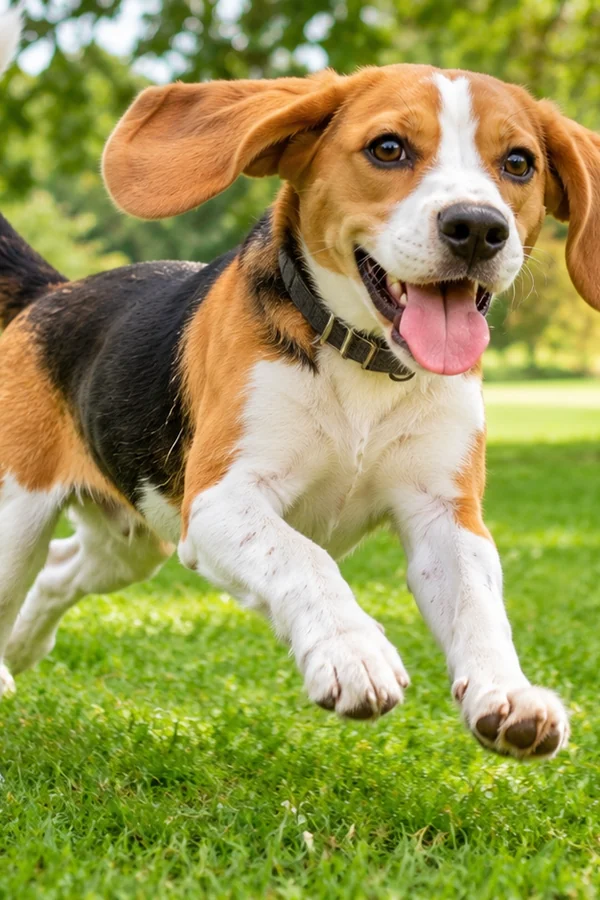
A Beagle is a scent hound. Generations of selective breeding favored dogs that could follow scent trails persistently and work alongside other dogs. In a modern home, those same traits can show up as determined investigation, vocal excitement and a strong desire to participate in household activities. The American Kennel Club’s breed profile describes Beagles as active dogs with substantial exercise needs and recommends leash use because of their scent-following instincts.
Natural curiosity and scent motivation
Where you see an ordinary sidewalk, your Beagle may encounter a fascinating collection of animal and food smells. Constantly interrupting investigation can make a walk frustrating. Providing safe opportunities to sniff gives your dog a useful way to express this natural motivation. It also makes outdoor time more interesting without requiring faster movement.
Social needs and learned excitement
Many Beagles enjoy company, but excitement can also be learned. If barking always leads to a game, or jumping leads to attention, those behaviors may become frequent. A dog with little opportunity to interact or explore may seek entertainment through digging, rummaging or chewing. Conversely, an entire day of noisy activity may leave a dog unable to wind down.
Look at what happens immediately before and after the unwanted behavior. This is often more informative than labeling your dog stubborn or assuming that its breed makes calmness impossible.
Is Your Beagle Hyperactive, Overtired or Under-exercised?
Owners often use the term hyperactive to describe any dog that is difficult to settle. It does not establish a medical or behavioral diagnosis. Different causes can produce similar-looking behaviors, so identifying the context is an important first step.
| Possible cause | Clues to look for | Helpful first response |
|---|---|---|
| Insufficient activity | Repeatedly seeking play after long inactive periods | Add suitable walks and enrichment gradually |
| Overtiredness | Frantic play, mouthing or poor focus after a busy day | Reduce stimulation and allow undisturbed rest |
| Overexcitement | Jumping, barking or pacing around a specific trigger | Increase distance and reward calm choices |
| Separation distress | Howling, pacing or destructive behavior during absences | Consult a vet and use gradual alone-time training |
| Possible discomfort | New restlessness, unusual panting or difficulty lying down | Contact a veterinarian |
These patterns can overlap. Dogs Trust’s guidance on overexcited dogs explains that excessive activity and insufficient activity can both interfere with settling. Watch your dog’s response when you offer a quieter environment. Record when restlessness occurs, how long it lasts and what else happened that day.
8 Signs Your Beagle Is Starting to Calm Down
Behavioral maturity is easier to notice when you compare your dog with its own previous habits. Look for these changes across ordinary days rather than judging a single particularly quiet afternoon.
- It voluntarily lies down while family members carry on with everyday activities.
- It recovers more quickly after greeting a visitor or hearing a doorbell.
- It can focus on a familiar cue even when mild distractions are present.
- It spends longer periods chewing an appropriate toy instead of seeking trouble.
- It pauses during play and chooses to rest without being repeatedly instructed.
- It can wait briefly for meals, doors or toys without escalating into frantic behavior.
- It switches attention from an interesting smell to its handler more reliably in training.
- It follows a daily routine with fewer persistent demands for entertainment.
A calm dog should still be curious, responsive and interested in normal activities. Emotional regulation is different from exhaustion, fear, physical illness or sedation. The goal is a dog that can enjoy excitement and then return to a comfortable resting state.
12 Practical Ways to Help a Beagle Calm Down
1. Provide appropriate physical exercise
For a healthy adult, around an hour of daily exercise is a useful starting point, consistent with AKC breed guidance. Individual needs may be higher or lower. Divide activity into manageable outings rather than assuming one exhausting session is best. Puppies, seniors and dogs with health conditions need individualized plans.
2. Make sniffing part of your walks
Allow your dog time to investigate safe smells instead of demanding a constant brisk pace. On a suitable route, alternate walking together with short sniffing opportunities. Keep your Beagle attached to a secure leash or supervised long line and avoid unknown food, chemicals and unsafe terrain.
3. Use food puzzles and search games
Place some of your dog’s measured meal in a safe food puzzle or hide several pieces of kibble around an easy search area. Begin with simple challenges your dog can solve comfortably. Supervise unfamiliar enrichment items, particularly if your dog tends to swallow pieces of toys or fabric.

4. Reward calm behavior when it happens
If your dog lies quietly beside you, calmly place a small reward between its paws. Do not turn every reward into an exciting celebration. This teaches the dog that resting can be worthwhile, rather than making attention available only after barking, jumping or pestering you. The American Veterinary Society of Animal Behavior supports reward-based methods for training and behavior modification.
5. Teach a relaxed settle on a mat
Introduce a comfortable mat in a low-distraction room. Reward your Beagle for approaching it, then for standing, sitting or lying on it voluntarily. Gradually reward longer periods of relaxed behavior. Once your dog understands the activity, add a cue such as settle and practice in other calm locations. Never force the dog onto the mat.
6. Protect sleep and downtime
Young puppies especially need frequent opportunities to rest. After a busy play session or training exercise, provide water, a toilet opportunity and a quieter space. Ask family members not to disturb a sleeping dog. Keep the area comfortable and accessible rather than using confinement as punishment.
7. Establish a predictable daily routine
Plan reasonably consistent times for meals, exercise, toilet breaks and sleep. Your Beagle does not need every day to be identical, but predictable transitions can help it anticipate what comes next. If your work schedule changes, try to retain familiar cues around breakfast, walks and bedtime.
8. Practice short impulse-control exercises
Ask for a brief pause before opening a door or handing over a toy. Reward the pause, then give permission to proceed. Keep expectations appropriate to your dog’s ability and gradually build duration. Avoid making the exercise unnecessarily frustrating or withholding essential needs such as toilet access.
9. Create a peaceful resting area
Choose a spot away from busy entrances, constant window activity and loud appliances. Provide a supportive bed, fresh water nearby and room for your dog to move away freely. A positively introduced crate or pen can help some dogs, but a dog showing distress in confinement needs a different approach.
10. Teach calm greetings and reduce triggers
Use distance, a gate or a leash under supervision when visitors arrive. Reward four paws on the floor and allow greetings when your dog is comfortable. Ask visitors to keep their movements gentle. If the window triggers repeated barking, temporarily block the view while teaching an alternative activity.
11. Build independence gradually
Practice short, comfortable separations while your dog is relaxed. Return before distress escalates and increase difficulty slowly. A dog that panics during absences needs a dedicated behavior plan, not simply more exercise or a command to be quiet. See the PDSA guide to separation anxiety for further guidance.
12. Provide consistent rules and seek help when needed
Ask household members to reward the same desired behaviors and use the same cues. If you cannot make progress, consult your veterinarian to rule out health problems and consider a qualified reward-based trainer or veterinary behavior professional. Early support can make a difficult pattern easier to address.
How to Teach Your Beagle to Settle: Step by Step
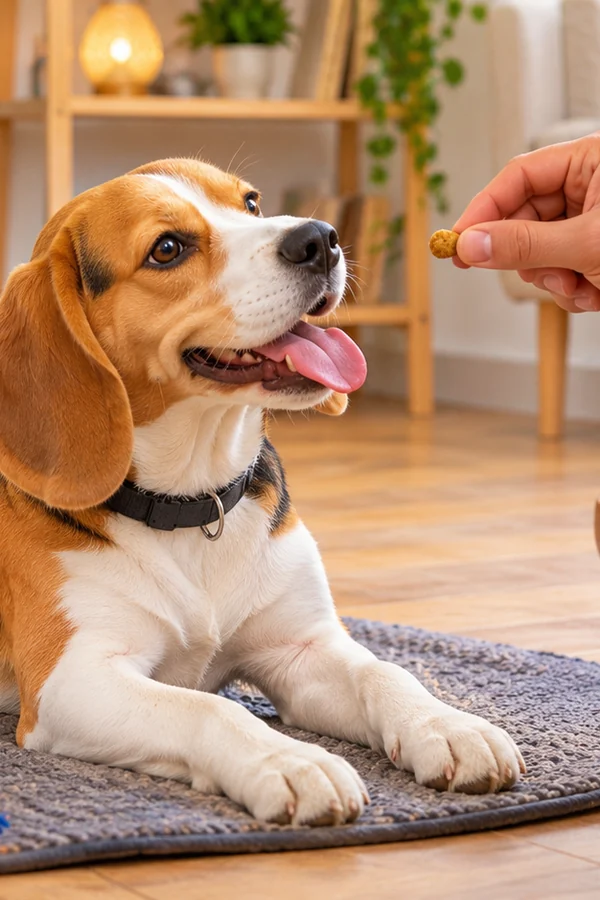
Settle training turns relaxation into a skill that can be practiced. Try it when your dog has had a toilet break and is neither frantic nor overly tired. Start in a quiet room and use small rewards from its normal food allowance. This is an example exercise adapted from general reward-based relaxation principles; see Battersea’s settling guidance.
- Place a mat on the floor and let your dog investigate.
- Reward voluntary contact with the mat, keeping your voice and movements quiet.
- When your dog chooses to lie down, deliver a reward gently between its front paws.
- After a few successful repetitions, increase the time between rewards by a small amount.
- Release the dog from the exercise before frustration develops. Repeat later.
- Introduce the verbal cue once the relaxed behavior is becoming familiar.
- Gradually practice while you sit, stand or perform quiet household activities.
If your Beagle repeatedly jumps up, decrease the difficulty. If it is calmly sleeping, there is no need to wake it for a reward. Eventually, the mat can become a familiar place to rest while you read, work or watch television.
How Much Exercise Does a Beagle Need to Stay Calm?
Exercise requirements depend on age, fitness, health, weather and the type of activity. The following schedule is an example for a healthy adult dog, not a prescription for every Beagle. Increase exercise gradually and consult your veterinarian if your dog has orthopedic, heart or breathing problems.
| Time | Example activity | Purpose |
|---|---|---|
| 7:00 AM | 25–30 minute walk with sniffing | Movement and exploration |
| 8:00 AM | Breakfast in a safe puzzle feeder | Problem-solving |
| Midday | Toilet break, brief play or easy training | Social contact and engagement |
| 5:30 PM | 30–35 minute walk or suitable outdoor activity | Fitness and enrichment |
| 7:30 PM | Brief calm training or supervised chew | Transition toward rest |
| Bedtime | Final toilet break and quiet routine | Comfortable sleep |
In hot weather, choose cooler times of day, provide water and reduce exertion. For growing puppies, prioritize self-paced exploration and several short play opportunities over long forced runs. Avoid using a rigid minutes-per-month rule as a substitute for observing the puppy and seeking professional advice.
A 7-Day Plan to Build Calmer Habits
This starter plan focuses on noticing patterns and practicing manageable changes. It is not a promise that behavior problems will disappear in a week. Continue your dog’s usual appropriate care throughout, and adapt every activity to its comfort level.
| Day | Focus | Try this |
|---|---|---|
| 1 | Observe | Record excitement triggers, rest periods and recovery times. |
| 2 | Sniffing | Include relaxed exploration on a familiar walk. |
| 3 | Rest | Protect an undisturbed nap after morning activity. |
| 4 | Enrichment | Introduce one simple supervised food-search game. |
| 5 | Settle | Practice two short, easy mat sessions. |
| 6 | Greetings | Reward calm approaches to a familiar household member. |
| 7 | Review | Compare recovery and resting habits with Day 1; repeat helpful changes. |
Track three simple measures: how often your Beagle settles voluntarily, how long it takes to relax after an ordinary event and whether it is getting uninterrupted rest. Small improvements are meaningful. If the dog is becoming more distressed, stop the challenging exercise and get advice rather than pushing through.
Why Won’t My Beagle Calm Down at Night?
Evening zoomies can follow an exciting day, insufficient daytime activity or overtiredness. Start by reviewing what happens in the hours before bedtime. A quiet sniffing outing, suitable evening meal, toilet break and low-stimulation activity may help your dog transition to sleep.

Avoid vigorous games immediately before bedtime if they consistently increase excitement. Dim the lights, reduce noise and give your dog access to its preferred resting place. Young puppies may need overnight toilet breaks and reassurance while adjusting to a new home.
Repeated nighttime pacing in an older dog, especially when accompanied by disorientation or changes in drinking, urination or appetite, deserves veterinary attention. Nighttime restlessness is not always a training problem.
Do Male or Female Beagles Calm Down Faster?
Some owners report that their female Beagles mature sooner than males. However, there is no reliable Beagle-specific timetable that predicts calmness from sex alone. A dog’s individual temperament, early experiences, health, reinforcement history and environment can be much more useful for understanding its behavior. Choose or evaluate a dog as an individual, not according to a rigid male-versus-female rule.
Will spaying or neutering calm a Beagle down?
Neutering can reduce certain hormone-related behaviors, particularly mate-seeking, mounting or some urine marking. Spaying prevents heat cycles. Neither procedure is a dependable cure for ordinary high energy, boredom, fear, learned barking or difficulty settling. The VCA guidance on neutering distinguishes changes in reproductive behavior from a dog’s general personality and playfulness. Discuss benefits, risks and appropriate timing with your veterinarian rather than choosing surgery solely to obtain a calmer dog.
Common Mistakes That Keep Beagles Overexcited
Trying to exhaust a dog every day can unintentionally replace calmness practice with an increasingly demanding exercise routine. Punishing excitement may make the situation more stressful without teaching an alternative. Inconsistent responses, such as sometimes rewarding jumping and sometimes scolding it, can also make household expectations difficult to understand.
Other mistakes include giving an adolescent unrestricted access to tempting objects, expecting perfect recall around wildlife and using food enrichment without accounting for calories. A Beagle benefits from management that prevents mistakes, activities that satisfy its natural interests and a consistent opportunity to recover after stimulation.
When Should You Consult a Veterinarian?
Seek veterinary advice if your dog’s behavior changes suddenly, it cannot rest despite appropriate care, or you notice excessive panting at rest, persistent pacing, limping, altered appetite or unusual vocalization. Pain and other medical conditions may cause restlessness. VCA’s guide to recognizing pain identifies changes in normal behavior as important clues.
Do not give human sedatives or use calming medications without professional guidance. When medical issues have been addressed, a qualified behavior professional can help create a plan for persistent anxiety, fear or overarousal.
Frequently Asked Questions
1. At what age do Beagles usually calm down?
Many begin showing better regulation during their second year, and some become noticeably more settled between two and three years. Individual variation is substantial.
2. Will my Beagle calm down at six months?
Possibly in some situations, but six months often marks the approach of adolescence. Expect ongoing changes in attention, confidence and energy.
3. Why is my one-year-old Beagle still hyper?
At one year, many Beagles are still developing adult behavioral skills. Review exercise, sleep, enrichment and reinforcement rather than assuming something is wrong.
4. Are two-year-old Beagles calmer?
Many are easier to manage than they were as adolescents, although strong scent motivation and enthusiasm can remain throughout adulthood.
5. What if my three-year-old Beagle is still energetic?
That may be normal. If it can rest comfortably between activities, healthy enthusiasm is not necessarily a problem. Persistent inability to settle deserves investigation.
6. Do Beagles ever become couch potatoes?
Some enjoy long naps, particularly as adults, but most still benefit from regular opportunities to exercise, explore and interact.
7. Are Beagle zoomies normal?
Brief energetic running can be normal, especially in puppies. Keep the area safe and investigate frequent or unusually intense episodes if they interfere with rest.
8. Can a Beagle live calmly in an apartment?
Yes, some can, provided their outdoor activity, toilet needs, enrichment and companionship are met. Vocal behavior may require particular attention.
9. Are Beagle mixes calmer than purebred Beagles?
Not necessarily. A mix can inherit different traits from either parent. Individual behavior and needs are more informative than the breed label alone.
10. Does walking more always calm a Beagle?
No. Suitable walks can help, but an overtired or anxious dog may need rest, environmental changes or professional support instead.
11. What are the best indoor games for Beagles?
Supervised food searches, easy puzzle feeders and short reward-based training sessions offer useful ways to engage their natural curiosity.
12. Can a second dog calm my Beagle?
A compatible companion may provide enjoyable social contact, but another dog can also increase excitement. Do not adopt solely as a treatment for restlessness.
13. How can I stop my Beagle from barking for attention?
First check for genuine needs or distress. Reward quiet alternative behaviors and provide predictable opportunities for play and interaction.
14. Will neutering stop Beagle zoomies?
No reliable evidence supports that expectation. Normal play and excitement may continue after surgery.
15. How long does calmness training take?
Progress varies. Practice brief sessions consistently and look for gradual improvements in voluntary rest and recovery, rather than expecting a fixed deadline.
Final Thoughts
So, when do Beagles calm down? Around two years is a useful general milestone, but maturity happens gradually. A satisfying routine, appropriate physical activity, scent-based enrichment, sufficient sleep and reward-based training can help your Beagle become more comfortable and manageable at every age. The aim is not to remove its enthusiasm but to teach it how to recover from excitement and enjoy peaceful moments alongside you.
Celebrate small improvements, adjust your expectations to your individual dog and seek professional help if restlessness becomes persistent or unusual. A well-balanced Beagle can be both an enthusiastic outdoor explorer and a relaxed member of your household.
Sources and Further Reading
- American Kennel Club — Beagle breed information
- PDSA — Beagle breed care
- AVSAB — Humane dog training position statements
- Dogs Trust — Helping an overexcited dog settle
- Battersea — Teaching calm and relaxed behavior
- PDSA — Separation anxiety in dogs
- VCA Animal Hospitals — Neutering in dogs
- VCA Animal Hospitals — Recognizing pain in dogs
- VCA Animal Hospitals — Common emergencies in dogs
- Dogster — Beagle development and exercise (editorial age estimate)
Editorial note: This educational article is not a substitute for individualized veterinary care. Age ranges are approximate editorial guidance rather than a validated breed-specific developmental scale.